Showing posts with label . pediatrics. Show all posts

Saturday, December 10, 2011

Door Number Three

Newborn child, seconds after birth. The umbili...Five days ago, six if you count Monday and orientation, I walked onto the obstetrics unit, knowing little more than Prissy (Gone With the Wind, 1939), who freely admitted she knew "nothin' about birthin' babies." I guess that means I knew next to nothing, which is okay; if I knew at the beginning of this rotation what I hope to know at the end, there wouldn't be much reason for what comes along in between, would there?

As it stands, I've already learned a few things, among them that I'm not inclined to drop a slippery newborn despite the fact, as a kid playing Little League, "Butterfingers" could easily have been my nickname. There's something about holding a baby who's just taken its first breath, that makes you hold on for dear life. Maybe it's parenting instincts kicking in, but the thought of losing your grip doesn't cross your mind. Holding them close with a quick, welcome-to-the-world snuggle in the crook of your arm, while passing them to the NICU (neonatal intensive care unit) team, you bet, but letting them slide through your fingers? Uh-uh.

And then, there's the matter of learning about the mess. Childbirth really is messy business. Television prefers spit and polished, shiny clean new babies who don't make anyone squeamish. Not so Mother Nature. There may be some blood, especially if junior's exit from the womb produces a tear in mom's vagina. There's amniotic fluid when her water breaks, though that usually occurs earlier, unless she's having a C-section, in which case the flow of amniotic fluid is more like a flood. To top it off, there's meconium -- baby poop -- mixed in for good measure. Martha Stewart would cringe.

Honestly, though, I don't mind the mess. Life is messy. Personally, I think trying to eliminate the messiness nudges more people toward neurosis than the other way around. It certainly is a driving force in narcissism, where the appearance of perfection is all-important. Babies have an entirely different perspective. Forget all that other stuff, okay? Mom was toasty warm, will someone please wrap me in a blanket? Ah, there we go, that's better. Mm. Thank you very much.

What I'm particularly enjoying about this rotation thus far is the tacit understanding that some things can only be learned here. Internal medicine teaches you how to write a good clinical note, surgery how to behave in the OR, pediatrics how to deal with kids and parents, psychiatry how to manage things going wrong, and then rural and family med puts it all together. None of them, however, specifically target birthing, prenatal care, or women's health (gynecology). So, in a sense, it's expected that a student is literally starting over at the bottom. You can use skills gained elsewhere to a certain extent and yet, so much is totally new. Every day is pregnant (pardon the pun) with possibilities and you never know what's waiting behind door number three.


(GNU Free Documentation image of a brand new newborn via Wikipedia)

Enhanced by Zemanta

Sunday, April 10, 2011

Thoughts on Pediatrics from a Cemetery


"Thickly Settled," read the yellow triangular traffic sign. Not the usual warning variety, I'll admit, but it works for Hancock Village, a double row of houses and a Baptist Church situated almost right on the state line between Western Massachusetts and New York. Greater Hancock extends further north, past Jiminy Peak Ski Area, to Williamstown, but the Village itself is smaller. I'm writing, on this warm, quiet-as-a-grave, Sunday morning, appropriately enough, from the Hancock Cemetery. It isn't that I'm particularly fond of cemeteries, but my guess is the dead are less likely to bother interrupting me to ask what I'm doing, so as long as my computer battery holds out, here I sit.

There's nothing like a rotation in pediatrics to remind you how little you know about children. What's this got to do with cemeteries? Nothing, really, I just wanted to share where I was writing from and how I'd gotten there. My real topic is pediatrics. So, anyway, six years as a Scoutmaster I thought might give me some expertise and I suppose it did, at least where boys age 11-18 are concerned.

Theirs was the generation of Arrowsmith and Guns N' Roses and my Bronco II rocked to their beat along the highways and hedges of Texas. Among their fellows I can count my classmates and future colleagues. Does that make me feel old? Hardly -- they got me out of myself and into life in ways that endure to this moment. Because of them, my CRV rocks to Lady Gaga and I'm not afraid to walk into an examining room with a kid with undiagnosed ADHD, bouncing off the walls.

Some things you don't get in the rarefied atmosphere of Scouts. For instance, a little guy who tinkered with the tiny flashlight at the end of my stethoscope, a trinket I claimed from Army recruiters who visited my school a couple of years ago, before allowing me to listen to his breathing. His mother said, more than a little surprised, "He's afraid of men, but he's good with you..." I resisted pushing the envelope to look in his ears. He didn't like the idea and I wasn't willing to risk our nascent therapeutic alliance, shaky as it was already. Besides, the nurse practitioner would have to do it immediately after me and once was my patient's limit. I'll see him eventually for a follow-up visit and hope the rudiments of our friendship are still intact.

There are little girls, seven going on 27, and others so shy they can't tear their eyes away from the shadow of daddy's chest and it's a challenge to do anything. We manage, sometimes with tears and mostly without, for which I'm grateful. A visit to the doctor can be traumatic even when there's a lollypop waiting at the end of it. Kids need to know coming to see the likes of me isn't always a reason to be sad.

It's more the therapist in me than anything else, whispering the wisdom of Carl Rogers, i.e. every patient deserves unconditional positive regard, whether they're old enough to put it into words or not. A smile, a wave goodbye, or the five year old who insisted I get a sucker, too, it all spells out the same. We find a space outside fear and uncertainty where we can connect.

I'll walk to my car sometime around five or six in the afternoon, dog tired.

And feeling good.


(Photo of historic Hancock Cemetery copyright2011 by the author)

Saturday, April 2, 2011

You Only Live Once


To be completely honest, I've rocked back and forth between remiss and downright absent-without-leave more often than not these past three weeks. And for that I sincerely apologize. The intellectual drain of rotations is as severe as the physical strain and it's getting so that weekends are my only time to contemplate writing. I do fantasize about it at other times, but usually when something cute, wonderful, or memorable has occurred, by the time I'm home, my mind is lucky if it can say, "Huh?"

Now, this condition is not uncommon. Most of my friends are tap dancing around their mid to late 20s and when one of them comes home, so slow and heavy are the footfalls up the stairs, you'd think they were summiting Everest. Rotations are tough and residency is tougher. I've got pals here from my entering class in psychiatry, surgery, and internal medicine and they're the pudding's proof. Tired R All of Us.

But there's more than that and I'm thoroughly enjoying the dormitory environment here in the "osteopathic ghetto," as I've christened it, since the apartments in our converted house are occupied by my classmates. Barely a knock before opening the door to shout is about as polite as we get.

About week ago, a few of us spent Friday evening playing Guitar Hero, a serious challenge, I discovered, for those of us who really know what to do with a six string. The game is about counting but we want to get down with the rhythm and be "big rock stars and live in hilltop houses, drivin' fifteen cars," even if the audience is only electronic and fame and fortune as fleeting as a flip of the switch.

Oh yeah, that's right, you read it here first, Beggar plays Guitar Hero and will again -- first chance he gets. I may have a hard time getting my brain to think in the evenings, but chasing that neon rainbow? Hey, you only live once.


(Creative Commons image by Kermitz72 via Flickr;
I Wanne Be a Rock Star, words and music by Nickleback)

Saturday, March 26, 2011

"I Like Pie," He Said.


He was sprawled full-length on the examination table when I walked in the room. He looked at me with an intriguing smile and a playful gleam. "I like pie," he said. That, I wasn't expecting.

I told him I liked it, too, at the same time his sister, a towheaded, adorably cute and shy five year old, turned big blue eyes on mine, then buried them in her mother's skirt.

"I like cake, too," he said, trying to regain my attention from his sister.

"So do I, especially chocolate."

"Chocolate's my favorite."

If the little guy was sick, he sure could cover. Before mom could explain why they'd come to the doctor's office, my partner in conversation informed me, "But I'm better now." Why am I not surprised?


He'd been wheezing a couple of days ago and was having the same problem just about this same last year. Mm. His sister had a runny nose and had one also last spring. Sounded like seasonal allergies for her and perhaps a little bit of asthma-like symptoms for him. "I'm hungry."

"I am too, but we're not calling out for pizza," I responded, winking.

Pizza wouldn't have satisfied, anyway. What he and his sister wanted was something I could only approximate. My curiosity was approaching the outer limits of the Richter Scale, so I shot their mother's hand a quick glance. No ring. That doesn't prove anything, but the kids' father hunger can't be denied. Mom was doing a great job, but she was still mom, and they missed her other half.

Waving as they walked down the hall left me feeling I wished I'd hugged them, instead.

I'd listened to their lungs, looked in their ears, evaluated their health. I just hope I was enough of their doctor to be a little bit of a "dad," too, when they needed him.


(Creative Commons image by RachelEllen via Flickr)

Saturday, January 8, 2011

Pink Hats 22: A Different Drummer

After-hours coffee and Danish from the Nook and Cranny had the earmarks of becoming a ritual between friends. Despite his pediatrics rotation having been complete around mid-September, Chuck continued drop by Bob's office throughout the first of his two required six-week internal medicine rotations and now an elective two weeks in radiology. On the other side of four more in OB/GYN lay psychiatry, at last. What he didn't expect was the residual effect of his initial month with Bob, Jessie, and the twins on his future.

"I keep thinking about that child-adolescent fellowship and it's all your fault," he said, hanging his head and faking misery.

"I've been blamed for a lot of things," Bob replied, ruefully, "including a baby when I was seventeen that I had absolutely nothing to do with -- and couldn't have even if I'd wanted to because I was on a Scouting trip during conception -- but this is a new one. Tell me."

They were sitting in Bob's office with their feet propped up on opposite sides of a massive roll top desk he'd inherited ten years ago from his pediatrics instructor who, at 80, decided it was a good time to retire and sail around the world. He made it, by the way, and now, he and his wife were trekking in Nepal, in celebration of his 90th birthday.

"Well, I thought I had everything planned out. Adult psychiatry was my bailiwick. Sure, I loved kids, just like you, but I enjoyed psychotherapy so much it was hard to see myself in another role. Then you came along -- and Jessie -- and the twins -- and the next thing you know, I couldn't get enough of pediatrics. Especially the kids with ADHD and parents who're going nuts trying to cope, the occasional bipolar disorder we've seen, and the substance-abusing teens. And frankly, I miss them. I feel like saying, along with the prophet Isaiah, 'Woe is me, for I am undone.'"

Bob pursed his lips and nodded, as though he had anticipated the news. "I had a feeling we were going to be a bad influence. It's even worse when the kids like you, and clearly, they do -- that's a trap waiting to be set. Top it off, when you can get teenagers talking -- well, all I can say is, you are in way wicked trouble, my friend." He broke into an appreciative smile.

"Looks like it. I don't know all the details yet, but I've got plenty of time -- see? You can't get rid of me, can you? Now, about the dream you mentioned a couple of days ago in passing, the one you had on the way home from Concord --"

"-- yeah, what did you think of that?" Bob asked, interrupting.

"It was a good one, especially coming on the heals of meeting Jessie's father."

"You're saying a dream's timing is as important as its content?"

"From the perspective of interpretation, yes. Dreams are one thing, the way we view them afterward, is another. My impression is, this one is suggesting you have your own rhythm. Kind of like Thoreau's comment, 'If a man does not keep pace with his companions, perhaps it's because he hears a different drummer.' In your dream, the bass drum was a stethoscope -- you're maintaining the 'beat' of the music all right, but in your way. Timing enters the picture because, from what you've told me about Jessie's dad, it sounds like he's inclined to do similarly. It's probably another one of the benefits of you being older, allowing the two of you to establish a more mature connection."

"I agree, but that didn't make it any easier. Sure, we were more likely to develop a peer-type relationship than would have been possible if I was nearer Jessie's age, but he's still her father and truthfully? I felt like I was 22 once again, sweaty palms included. I guess none of us are as 'together' as we'd like to believe."

"That holds true for me, I'll tell you. One thing you can definitely count on is your relationship with her father making life a great deal easier for Jessie."

Bob was in mid-bite on his Danish. He stopped, put it down, and said, "I would assume that's a 'given.'"

"It is, but there's more. It tells her she doesn't have to love one of you at the expense of the other. It gives her a deep, abiding sense of security about two of the most important relationships a woman can have with men. And a woman like Jessie, who clearly wants someone with more maturity than a guy closer to her own age might possess, has the unspoken expectation that whoever she brings home, should be someone her father can respect as well as one who respects him. You already know this, but she's really an extraordinary woman -- I hope I get half as lucky." With a gleam in his eye he added, "Wait a minute. Didn't you tell me she has a sister? Anyhow, looks to me like you hit this one out of the ballpark. When are you going to pop the question?"

Bob laughed, "One at a time. First, yes I did and she's available, but I think it would look better if Jessie played matchmaker. A professor setting up a date might appear as unfair advantage. As to the second, I haven't quite decided, but I'm thinking around Christmas. It's our favorite time of year and even a romantic moron like me can pick the right place. I need to find a ring and I haven't figured out how to get her size without coming out and asking. I could do that, I suppose, but then the cat would be out of the bag and I'd like this to be a surprise. Not that we haven't talked or at least alluded to it. I just want very badly for her to have the 'fairy tale,' you know?"

"Yes, I do, and she'll love you for it."


(Creative Commons image by Allie's Dad via Flickr)

Enhanced by Zemanta

Sunday, December 19, 2010

Pink Hats 16: A Little 'Couch' Time


"Howdy. You weren't visiting the twins, so I thought I'd find you here." Using the code Bob had given him, Chuck tried the doc's lounge. He stepped over to the counter and selected French Roast from the automated maker. "You want a refill?"

"Hey, Chuck. You done for the day?" asked Bob. He looked at his watch, 8:00 PM, and added, "For the evening? Yeah, thanks."

"Pretty much," Chuck said, knowing he was preaching to the choir. Bob was no stranger to late hours, especially since he'd started seeing the twins. "Unless you have anything going on I can help with, that is. You know me, glutton for punishment."

"Suits you well as a student -- within limits. It's easy for an overworked resident to take advantage of you without meaning to and you end up doing more than you should. Just be aware. It's like 'the road to hell is lined with good intentions.'"

"Thanks for the heads up. So, speaking of which, are you done with me?"

"More or less. Have a seat, there's something I'd like to bounce off you, something personal, if you'd be willing. A little informal couch time."

"Not at all. What's on your mind?" he asked, setting both cups on the table and falling into therapist mode. Asking a patient what was on their mind was one of his favorite open-ended questions for initiating conversation. With a new one, it might be, "How can I be of help?" Though Bob wasn't a patient, old habits die hard.

"To get right to the point, I'm thinking about adopting the twins. I've gone through my own list of reasons, my age, and so forth, but I'm wondering how it looks to someone like you, with your background. If I were to ask for 'psychological' impressions, what would you say?"

"I'd say it's interesting you should bring this up because it reminds me of a patient I worked with a few years ago. He was retired military, put in 30 years, had never married, and was thinking he'd like to have a family. Mid-fifties, had been careful with his money, bought a house in Denver, and gradually came to realize he'd lived primarily for himself most of his life. He wasn't depressed, he didn't appear to be compensating for guilt or avoiding grief. He wasn't trying to use kids to 'save a bad marriage,' as sometimes happens. He was simply a guy taking stock of his life and had been thinking for quite a while that he'd missed out on some important things along the way."

"So, you're saying he was having a mid-life crisis?"

"You could say that. I didn't because mid-life is always a time, for men at least, of reevaluation, thinking back-thinking ahead, getting in touch with feelings in ways they'd ignored for most of their career-building years. The idea of a 'crisis' is usually associated with an acute, precipitating event like a divorce or illness that forces a man to face up to his mortality. I didn't get any of that from him. Retirement can do it, of course, especially if a person doesn't prepare and has no specific ideas for using their time. This guy had opened a photo gallery in Lo-Do a year before I began seeing him -- Lo-Do is Denver's equivalent of Portland's Old Port -- and was happy, optimistic, and overall, doing quite well. Families would come in, he said, and he noticed how he felt when he saw them. He'd started working with Big Brothers, thinking doing something with one kid would help, but it wasn't enough. So, he thought maybe it's not too late to have some of his own.

"Sure, it's possible to interpret his desire as denial of mortality -- if he has kids, he won't get old. I was reluctant to do so because it seemed to me he was attempting to be more true to himself, to the person he might have been, to accept responsibility for himself as a man in mid-life, rather than pretend he was 22 once again, footloose and fancy-free."

"Women do it, have children on their own," Bob said, "and quite often, as a matter of fact. I have several patients of single mothers -- you've seen a couple of them -- who became pregnant by artificial insemination. Career-minded, they found themselves getting older, with no immediate prospects of a husband on the horizon, and besides, they didn't want to marry just to obtain a sperm-donor. Their biological clock was getting closer to midnight and they felt like it was now or never."

"Exactly. It's part of the 'changing face' of families we've been seeing in the last few years. Anyway, he and I spent a few sessions talking about alternatives, should he adopt an older child, did he want to deal with diapers, was there a love interest on the horizon. Then we got into what it all meant for him and of course, that's when things got really interesting. He had a sister with three kids and when they were younger, the two of them discussed who would be best suited to provide their parents with grandchildren and who would take on the role of being the hot-shot career person. She wanted a home and family, their dad was retired military, so it seemed natural for a son to follow in his footsteps.

"We talked about how that decision may have derailed any desires he may have had to procreate and how those were, apparently, resurfacing. Having done his duty for God, country, and his family of origin, now he wanted to live the rest of his life more on his own terms. In that sense, he hadn't been living for himself at all, as he initially believed, and instead, had lived for others, fulfilling expectations that weren't necessarily his. Opening a gallery rather than becoming a CEO of a Fortune 500 company was certainly a 'feminine' thing to do in terms of expressing beauty and creativity, and it showed how he was becoming increasingly open to the depth dimension within his own life. You might say he was doing 'soul work,' tapping into deeper levels of his psyche."

"Chuck, you ought to be a psychiatrist. If you like pediatrics, do child-adolescent, you can still work with parents. As far as your patient's story is concerned, you're talking about me, whether you know it or not."

"I wasn't sure, but I had a feeling. Anyhow, to wrap this up, he eventually did go ahead and adopt. He started the process while we were working together and then I saw him at intervals over the remainder of the year to check-in on how things were going, do follow-up, and help him with the transition to fatherhood. I got a letter from him last week -- he writes every now and then -- with a photograph of him and the kids. He adopted a boy 5 and girl 3, brother and sister, whose parents were killed in Bosnia -- like I say, this was a few years ago. He went over, saw them in an orphanage, and brought them back to the States. They're in their early teens now and the three of them were on vacation in Honolulu. He said adopting was the best decision he ever made. Oh, he's also dating a woman who has two more -- only these are little, two or three, and he's thinking it may go to the altar. If it does, he said, he's ready to be a father for the second time."

"Let's go back to something you said earlier, about avoidance of grief. What's that about?"

"It's generally assumed women suffer more from infertility or the absence of children than men. The truth is, men suffer, too, though it may not show up until the middle years, 40s and 50s. At that point, it's usually an issue that may or may not get him into therapy. In any case, his options include, first, to actively mourn the loss of children and come to grips with his life as it is. I've worked with men who did this and came out on the other side with a renewed sense of purpose and satisfaction. Second, he can try to avoid mourning altogether and I'll see him when he needs an alcohol or drug detox admission or a script for an antidepressant and therapy. Generally, that's how it goes. The third is more complicated but it applies to the patient I described and I'm guessing it also applies to you, at least based on my observations."

"You've been observing me." It came as a bit of a shock, but he said it without offense.

The jig is up, Chuck thought, oh, what the hell, go ahead, tell him, the worst he can do is flunk you. "It's an occupational hazard. When you 'read people' for a living, you start doing it without thinking. But as a student, working with physicians or staff I'm unfamiliar with, it helps to develop my own sense of who they are and what's important to them. What they say, what they mean, and how they behave, can be very different.

"In your case, to be completely honest, I think you've probably done quite a bit of mourning, and I say that because men in mid-life who haven't, tend to lack a measure of emotional stability. They aren't centered, in other words; they don't really know themselves. You do, or you're working at it, which is the same thing. Furthermore, you haven't found that process to be completely satisfying, no matter how hard you've tried to convince yourself it ought to be. That's why you were standing out there in the middle of the road when a Mack truck came barreling along in the form of the twins. Desires like the one you're experiencing, that don't go away with the grief process, are ones we have to resolve in other ways. If we can't work them out by volunteering or being more involved with nieces, nephews, or children in the family, the choices get kind of obvious."

"Yeah, I think so, too. And that's what makes love not quite enough. I mean, it is up to a point, but I could love the twins without adopting them. Taking that step means I need to do it as much as I want to."

"And there's nothing 'wrong' with that. This is as much about you as it is the twins or anyone else you choose to involve. Clearly, you have a legitimate need to express your affection for them as their father, not merely as an altruistic bystander. Maybe you felt that way at first, maybe not, but you sure don't now. This is not something to take lightly or dismiss as self-interest. What it boils down to is, your 'inner father' is not going to be happy until you're doing what you believe you were meant to do.

"The need-to part is driving you forward, propelling you to deliberately think about the implications of your actions, how to be a good parent, and how to provide adequately for the twins. It makes you responsible. The want-to part is love; that's ultimately what makes the prospect seem worthwhile; it tells you this is the right thing to do and motivates you to give your best. Bringing those two together, as you have been doing, allows you to experience wholeness. The 'Bob' you were meant to be is the one you're becoming."

"Are you going to charge me for this?" Bob asked, cracking them both up. "Seriously, you ought to. And don't let anyone talk you out of being a psychiatrist, either, not even me. You can count on a hell of a recommendation from me when you apply for residency -- you are applying here, aren't you? I can help with that."

Bob heaved a huge sigh. It seemed to him like he'd done a lot of sighing lately. That's good, he thought, it means I'm feeling and feeling is better than not, any day of the week. "This is the right thing to do, for the girls and for me, and I believe, I hope, it is for someone else I'm thinking of involving. Talking about it tonight -- don't worry, I know you're my student, but this," he said, waving his hand across the space between them, "this is outside that relationship. We're both a little older, I think we can handle the differential. Anyhow, talking about it tonight, I'm even more convinced. Anything else, feels so lousy I don't even want to contemplate it." At Chuck's nod, he said, "I take it you agree, following my gut is better than going counter to it. Good. Thanks -- Doc." He smiled and got up, scraping his chair along the wooden floor.

"Anytime." Chuck said, smiling in return. "I'll send you my bill."


(Creative Commons image by pasukaru76 via Flickr)

Enhanced by Zemanta

Friday, December 10, 2010

Pink Hats, 11: Medical School Hop-Scotch


A long overdue passing score on boards, he considered, was only the beginning of his troubles. Third year rotations -- the medical school version of hop-scotch from one specialty to another -- were beginning and about all he had in his kit was the equivalent of two years of academics -- just enough to get myself into trouble. Well, there was also the Red Cross Advanced Life Saving card in his wallet. As if anyone is going to entrust me with saving anything at this point. He likened it to being sent into battle with an unloaded weapon and orders not to shoot anybody.

The closest he'd come to the actual practice of pediatrics, the starting square for his particular game, was a close call in late August with a pair of twins he and his dog discovered in a trash bag flung from a speeding car. His ACLS training definitely came in handy then, and that will probably be the last time for a long time, he thought, but anything can happen. When his intern asked about previous knowledge or experience, he was sorely tempted to say, "I know that little girls are made of sugar, spice, and everything nice, and little boys of snakes, snails, and puppy dog tails," but somehow he didn't think that would go over very well.

Earlier the same morning he'd met his attending, Dr. Bob Z., who informed him, tongue in cheek, that the only requirement for obtaining an honors grade in any rotation he was supervising, was the successful pronunciation of his last name. Bob even went so far as to write it out for him in printed block letters. He decided it couldn't hurt to try, so he thought long and hard and said, "Smith." He was wrong, but got points for daring to make a joke about it on the first day. Then Bob asked about his experience.

"I wondered if you and I would ever meet," he said, cryptically, after hearing his student's story.

"I'm not sure I follow you."

"I was the attending on duty in the ER when your twins came in and I've been following their case, mostly as an interested bystander. You probably haven't had a chance to see them yet -- why don't we go together? I think that would be appropriate, given our mutual connection."

They left his office on the second floor of the Mediplex building and walked across the skyway into the maze of the massive Maine Med campus, eventually finding their way to the Barbara Bush Children's Hospital, near the east-facing side. Since its inception in the mid-nineteenth century, Maine Med had grown organically, which is to say, as much as by necessity as by design, recent additions excepted. Getting the lay of the land usually took some doing.

Jessie was waiting for an elevator when a pair of doors slid open. Bob was in mid-sentence, something to the effect, "You'll be spending quite of bit of time over here, so be sure to --." she was concentrating on her iphone, neither watching where they were going. In a collision between two bodies of unequal mass, physics tells us the lesser one will usually go flying.

He barely caught her on the way down.

Startled, his concern more obvious than he might have liked under the circumstances, he said, "Jessie! I'm so sorry, I -- are you okay? I was preoccupied -- "

"I'm fine, I don't break easily, I should have been paying attention," she said, more amused than anything, her eyes sparkling at his attention, "Fortunately, you saved my 'dignity' any harm, and for that I'm grateful."

She brushed a wave of hair away from her face, then noticed someone she didn't recognize smiling at their exchange and shot a quizzical look at Bob. "God, I'm an idiot," he said, "This is my new student, Chuck Collins. Chuck, Dr. Jessie Livingstone. She's a neonatal fellow and worked with the twins while they were in the NICU."

As the two shook hands, he went on to explain, "Chuck is the student who found them in the first place. We were on our way for a visit. Why don't you join us?"

"I'm headed to a family meeting" -- she looked at her watch -- "I'm late for a family meeting. Nice meeting you, Chuck," she said, nodding in his direction. "Before I go, can I get a quickie consult?"

"Sure -- would you excuse me a moment?" he asked of his student and stepped away. "What's up?"

Maintaining the facade of discussing patient confidentiality in public, she whispered, "I went to New Hampshire yesterday. To talk with my father -- he's wonderful and you're going to love him. I want to tell you about our conversation, only not now, obviously."

"Funny you should mention it, I had one with Halley yesterday I'd like to tell you about," he said, also in a low whisper.

"Mine needs more than lunch or dinner. I mean, we could start there, but I'd really like some serious time."

"How about the weekend? I've been thinking a drive up the mid-coast would be a nice get-a-way, not too far, we can do it in a day, and it's pretty up there."

"Sounds perfect, but I'm on-call Friday night through Saturday and you're working Sundays..."

"Not anymore and I'll tell you about that, too. So --"

"-- Sunday's a date, as long as I can take you to the Sweetgrass Farm winery. Their Maple Smash is to die for," she said, trying hard to contain her growing anticipation. Somewhat louder, she added, as two nurses walked past, "Thanks for the consult, Bob, I appreciate it."

"My pleasure, anytime. Okay, Chuck, now where were we?"


(Creative Commons image of Hop Scotch by marc0047 via Flickr)
Enhanced by Zemanta

Thursday, December 9, 2010

Pink Hats X: The Beatles Connection - George Harrison, DO


"Oh, half of my heart's got a grip on the situation, half of my heart takes time..." Jessie sang, harmonizing with John Mayer, stopping in mid-line."Let's leave 93 to the Mass-holes, Sam," she said, swerving away from the interstate on-ramp to take Route 4 through eastern New Hampshire to Rochester, Sanford, and Hollis on her way home. It was only mid-afternoon, after all, and the countryside would be lovely. Actually, she disliked the term, "Mass-hole," coined no doubt by a disgruntled, albeit verbally-creative, crowd-weary Mainer at the end of another tourist season, but she disliked the Sunday afternoon traffic racing back to Boston even more.

The drive would take longer this way, but the sense of urgency she felt that morning was gone, and she wanted to think without having to dodge every Tom, Dick, and Be Wary on the road. Before she died, her mother used to say, affectionately, "You got my hair, my eyes, and your father's temperament," referring to a directness in stating her preferences a younger Jessie feared might have little appeal to the boys. In reality, there were usually so many queued up at their door, her father threatened to hand out sleeping bags and start charging rent. Something happened, however, during her second year of medical school, prompting her to begin noticing the line less and less.

She met Bob.

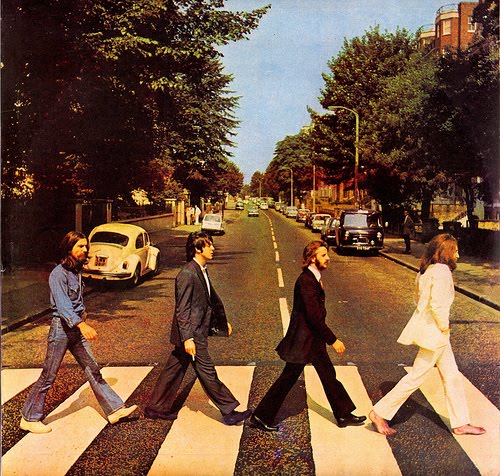
He was walking across the park-sized lawn in front of the Alfond building, with a backpack slung over one shoulder. Dressed in jeans, corduroy jacket, and chukka boots, he reminded her of George Harrison on the cover of Abbey Road -- with shorter hair and no beard. Without realizing it, she started humming her favorite album cut, Here Comes the Sun. It was his maiden lecture as a clinical professor of pediatrics, and despite serious efforts to the contrary, Jessie couldn't quite drop the Beatles connection. George Harrison, DO, would flash through her mind and she'd reach for her coffee mug to cover a smile.

She drained the last drop of her morning dose just as he announced a break and she left class quickly, aiming at the bathroom for relief and the coffee bar for a refill. GMTA she thought, when he stepped beside her, pardoning himself as he reached for the sugar. For some reason, she didn't know what, she placed her hand on his arm and said, "Try the Splenda. It tastes as good as sugar, but it's better for you. Fewer calories." They looked at each other for a count of one thousand one, one thousand two, one thousand, before the clock started again and they finished doctoring their cups. She did see him switch to Splenda and make an appreciative face after trying his coffee.

That was it. Until the next day when she ran into him again, crossing the parking lot, this time in jeans, a tweed jacket, and Nike's. "Hi Splenda gal," he said, smiling. No one had ever called her "gal" before. She returned his greeting, asked what she was sure was an insignificant question, in response to which he proceeded to wax lyrical about the joys of pediatrics. All she remembered afterward was how she felt. It was the same way she felt the day before, with her hand on his arm.

Most of her dates, she reflected, had resulted in her feeling either like a girl or "mom." Maybe it's like that with all women, she didn't know. But for most of her part, she was a good time waiting for a place to happen or the one who warned the guy to keep his eyes on the road and off her anatomy. She had no desire to live fast, die young, and leave a beautiful memory. Bob, however, was another thing, and the best she could say about it then was not much better than she could do now, but maybe that was all that could or needed to be said. From the instant she was aware of him, standing next to her, reaching for sugar, and perhaps even before, she felt like a woman.

Her roommate called it a father transference, as did a dog-eared Freud Made Simple Jessie found in the library. Her faculty adviser, however, a newly crowned PhD in evolutionary biology and biochemistry said "Transference-shmansference. Freud was a man, what could he possibly know about women? If you feel like a woman around the man you describe, it's because he doesn't need you to be anything else than who you are. It's called freedom, Jess. A rare and wonderful thing, in my experience. Hold onto it."

Now her father was saying virtually the same thing. Thank you both very much, she thought, I think I will -- hold onto him, that is.

(Creative Commons image of Abbey Road album cover by Affendaddy via Flickr; Half of My Heart words and music by John Mayer, copyright 2010)

Enhanced by Zemanta

Tuesday, December 7, 2010

Pink Hats, Part IX: Life is too Short for Playing It Safe


Women are instinctive, Jessie knew that much, and in the past few weeks, her instincts had been working overtime. Surprising her with coffee first thing in the morning meant Bob had done his homework: he checked her schedule to make certain she was working and brought something special, a "box of chocolates" in the guise of a large mocha. Dinner at Grace Restaurant was her idea of giving him a glimpse, but only a glimpse, of the cards she was holding, and things had gone on from there. Those same instincts woke her from a sound sleep two hours before the alarm on a Sunday morning, whispering, Go to New Hampshire, talk to your father.

By nine-thirty, she and Sam were on 95, halfway across the Piscataqua Bridge, the point at which you leave Maine and enter the Land of No Sales Tax. From Portsmouth, she'd hop over to I-93. We’ll be in Concord before dad can shake hands with the vicar and tell him it was a fine sermon, she thought. 

A dedicated religious skeptic, her father married a 23 year old high school biology teacher and devout Episcopalian he met at a Grange Hall dance. That was 1975. Prior to, he did a stint in the Army complete with what he enjoyed calling an “all-expenses-paid vacation in Viet Nam.” Afterward, there was college and vet school. Seventeen years and three children later, she was killed when her car slid off an icy road and down a rocky embankment, the week after Christmas. The Sunday following her funeral, he walked into Concord's Grace Episcopal Church, and took a seat in the pew closest to the rear exit.

Jessie was thirteen, her sister eleven, and their brother sixteen. Somehow, they pulled together, and he managed to get them all through college, medical and veterinary school as a single parent. It took ten years for him to move from the back of his wife’s parish to the front row of pews, and five more to prompt him to enter the permanent diaconate. No one was more surprised than he. If you asked, he'd still say he was skeptical of religion, but this way, he feels closer to his wife. He'd also say it makes more sense to let his doubts argue directly with their source, rather than stand in the street and throw rocks at the windows. It’s the way he's generally approached life.

Jessie and Sam were waiting when he pulled his truck onto the meandering unpaved driveway that wandered through his five acres of orchards and tall grass. He was barely out of the truck when Sam was practically on top of him. Tail wagging wildly, he grabbed a hand as though it was a soft chew toy and led him back to the house. Sam was in charge of this walk. 

"And to what do I owe the pleasure?" he asked, wrapping his life-sized grizzly/teddy bear arms around his daughter and raising her on tip-toe, "my birthday isn't until next month." At 72, his strength never ceased to amaze.

"I missed you. I've been busy, you've been busy, and I decided I didn't want to wait."

He held her at arm's length. “Well, I'm glad to see you, too, honey." His eyebrow just then did a "Mr. Spock," and he added, "Hold on, something's different. Did you change your hair?"

She smiled and dropped her eyes, "It is? Leave it for you to notice. No, my hair's the same. What's that?" She nodded in the direction of a brown paper package he'd laid on the wicker porch table. She's changing the subject, he noticed.

"Bake sale at church. Abby Johnson's cinnamon rolls. You're mother would kill us both, if she knew. Twice the sugar, three times the fat, and all the flavor -- come on in, let's make coffee and put a dent in these."

Jessie's mother hadn't been a flower child, but she had sympathies. Organic farming was new and she threw herself into a study of its health benefits and used their orchard and large garden to experiment. Refined sugar and excess fat were strict no-nos at the dinner table except on holidays, and then she pulled out all the stops.

"Okay, sweetheart," he said, wiping his mouth with a cloth napkin that mimicked a black and tan chessboard, "time for you to tell dad what really brought you all this way on the spur of the moment."

"I told you, it's because I missed --"

"No, no, no. My hearing is still good, apart from that incessant ringing, and Alzheimer's I don't have. Not yet. Let's cut to the chase."

"It's called tinnitus and aspirin therapy is probably to blame -- it's the price we pay for the damage Abby Johnson's baking does to our arteries. Tell your doctor, maybe he'll adjust the dose – and, I’ve met someone. That sounds recent, but we've either known or known of each other since medical school. Anyway, we've started dating and I…wanted to tell you about him."

"Former student?" He took a sip from a white bistro-styled cup with the letters U-N-E stenciled in light and dark blue down the side. Jessie brought home a set of four after her med school interview and he used one every day until she received her letter of admission, "for luck." It was the same with her younger sister.

Jessie took a deep breath, and said, "He was one of my clinical professors in pediatrics.”

He stopped in mid-sip, lowered his cup, and set it carefully on the table. “I see.”

“You're enjoying watching me squirm, aren’t you?”

“Of course,” he said, smiling smugly and then ducking as she pretended to throw her empty cup at his head. And that’s how the conversation went, with her tracing the outline of her relationship with Bob while he tried to listen without making her smile and lose her train of thought. It reminded her of the way she and Bob were, and silently she breathed a prayer of thanks to her mother for finding a man like her father.

“I could make it easy and say I like him, and I do, but it’s deeper than that. I think I’m in love with him, dad. He’s older, as you’ve probably already guessed, and while that’s not a problem for me, I wasn’t sure how you’d feel about it…?”

“I think you’ve both been incredibly patient, to wait this long. What held him back, do you know?”

“Partly, he was recovering from his divorce and didn’t want to drag me into a messy situation. But he was also concerned, particularly during my residency, that no one could say my accomplishments were a consequence of him being in the background, covering for me. He wanted me to be able to take credit for my own work and be recognized for it. Meanwhile, I had no idea what was going on. We talked fairly often and even had lunch in the cafeteria a few times, but he consistently kept his feelings under wraps. When he told me all of this over lunch yesterday, I was speechless.”

“Not hard to understand why. Let’s go out on the front porch.” He stood up and walked over to a walnut secretary that stood against the wall in the dining room, opened a drawer and began rummaging around, eventually lifting a up an old pipe, an unopened tin of tobacco, and a box of matches. “I haven’t smoked this in years, not since your mother. But right now, it strikes me as a good idea.”

She settled in a large wicker chair letting her legs hang over one arm. Sam curled up at her feet and began snoring while her father lit his pipe and took a seat on the wide porch swing. Almost fifteen minutes passed before he said anything. “Baby,” -- he would call her that to his dying day -- “I think you may have found the pearl of great price. I don’t quote the Bible often, but I haven’t known many men who would put their girlfriend’s interests above their own quite like that, certainly not for five and a half years. Maybe it’s because of his age and presumed maturity or because he’s been divorced, but it sounds to me like he knows without question what’s important to him, and who.

Now, you wondered how I’d feel about his age. Well, the best answer I have for that is, your mother and I had nineteen years, seventeen of them married. If I had it to do over again, knowing I’d lose her and there was nothing I could do about it, I’d marry her in a heartbeat. If you love this man, and it sure looks like he loves you, whether he knows it or not, you’ve got something worth holding onto. Life is far too short to play it safe.” 

He knocked the ashes from his pipe on the railing and said, “This wasn’t near as good as I remembered it.”

She laughed. “Unlike Abby’s sweet rolls that get better each time she bakes them. I want you to meet Bob, and soon.”

“Oh, that’s a given, and the sooner the better. If I’m going to have a son-in-law, I need to start getting used to the idea.”

“Who said anything about a son-in-law?”

“You did. I saw it on your face when I said what I said about life being too short. And it is, Baby, never forget that.”

(Creative Commons Image of the Piscataqua Bridge, NH by plousia via Flickr)
Enhanced by Zemanta

Saturday, October 23, 2010

Dr. Bob Z's Twins (Pink Hats Part IV)


It was 5 AM when his sunset rendezvous with a luscious brunette from New Hampshire, who bore a striking resemblance to actress Megan Fox, was rudely interrupted by Jerry Reed's country twang, "She got the gold mine and I got the shaft."

"Wait, baby, let me find...the…damn...button..." he said, waving his arm in the general direction of the nightstand, fumbling the effort to distinguish lamp from radio, and knocking both to the floor. He tried to roll over and mentally grasp the fleeting remnants of his dream girl, but gave up after a few seconds -- like it or not, he was awake. "Oh, God," he sighed, threw off the bed clothes, got up, stepped on the clock, swore again -- this time more colorfully – and resisted the temptation to drop kick Jerry all the way back to Nashville.

His earliest patient wasn't due at the office until nine, but he wanted to stop by the hospital on the way and look in on the twins. Breakfast had never been his ex's strong suit and he found out long ago if he was going to avoid crashing and burning in a mid-morning hypoglycemic conflagration, he'd better learn how to cook. A pile of scrambled eggs and hash browns later, he pulled into the parking lot of the Nook and Cranny, feeling a sudden, inexplicable urge for one or maybe two of their legendary Mochas. Two would definitely be better, he thought.


Inside of twenty minutes, he’d gotten his order, driven up the hill to Maine Medical Center and despite Halley’s admonition, quietly slipped up behind a young woman in light blue scrubs and wrinkled white coat sitting at the NICU nursing station. Reaching in front of her, he placed a muy grande Mocha on the counter and asked softly, “Dr. Livingstone, I presume?”

“At this point, I'm not sure,” she said, yawning, “I'm so tired I could literally be almost anyone.” She cupped the cardboard-collared recycled paper mug in both hands, took a long appreciative whiff, and smiled at him over the rim. "How is it you’ve always known when I need this the most?"

“Doctor’s intuition, GMTA -- shoot, maybe we're just on the same wavelength. Speaking of which, I actually do seem to remember reading something to that effect in the hospital newsletter.”

She laughed and said, “It’s our own fault for having a wannabe gossip columnist for a PR director.” 


“He’s got to write something of human interest, I guess,” he said, half-shaking his head to the right in a way she’d long ago memorized like a teenage girl memorizes the lyrics to her favorite song.

She reached for a tissue to wipe whipped cream from her upper lip, blushing slightly. “So, besides being my hero and bringing me coffee, what’s on your mind this fine morning?”

He sidestepped the potential set-up for the moment and said, "A pair of female twins I sent up from the ER yesterday afternoon. They'd been abandoned when one of your classmates -- no, one of the newer students -- found them. I was the attending and thought I'd follow up."

"I saw your note; they’re both wonderful; nary a peep from either. You’d have made a great neonatologist. But you want a closer look, right? Let’s mask and gown.”


A few seconds later they were standing next to the NICU equivalent of a crib built for two, the twins snuggled close and sleeping on their backs, when he saw the name tag. Usually, in the absence of formal identification, these read something like “Alpha” and “Beta,” but not this time.
 
“What…in…the…hell?” he whispered, enunciating each word as though it was a sentence of its own.

“Hush,” she said, raising a gloved index finger to the mask over his lips. “This is a NICU, remember? Now relax -- it’s a little staff humor. Soon as their story got round, one of the nurses said her daughter was reading stories involving the Bobbsey Twins -- the girls who were amateur sleuths? You're a pediatrician, you've seen the books I'm sure. Well, everyone calls you “Dr. Bob” because your last name is unpronounceable and begins with “Z,” so it makes sense. Dr. Bob Z’s twins.”

“Oh, shhh…” he began and stopped, noticing her warning glance.

"...sugar." 

(Photo copyright 2010 by the author)
Enhanced by Zemanta

Tuesday, September 7, 2010

Pink Hats and a Mack Truck


He was working the ER when they were brought in. Holiday weekends like this one -- Labor Day -- are the playground for Murphy's Law, i.e. anything that can happen, is likely to, so don't be surprised when it does. He began covering holidays after the divorce; it kept his emergency skills up to date and it was better than sitting at home, wondering why "I do," at least in his case, inevitably led to legal fees.

He really had no place to go; his work had become his life, and the only family he had left was so scattered, they may as well have lived on the dark side of the moon. Busy is good, he thought, why not give someone else a break to be with their kids, instead? That was five years ago and it had gotten to be a habit. Besides, it allowed him to spend time with nurses like Halley Henry, who'd more or less "adopted" him during his fourth year emergency med school rotation to prevent him from accidentally killing any of his patients.


He'd been on duty since 6.00 AM -- early morning was never his best time, but since he didn't write the schedule, there wasn't much he could do about it. Close to twelve hours later, he was anticipating washing down a Swiss and mushroom burger with a bottle of Rock Art American Red ale at the Old Port Tavern, a favorite watering hole for the post-call crowd, when an ambulance showed up. He could have turned it over to the evening guy, but this one was too good to pass on: twin girls, born only a few hours earlier, found by a medical student in a trash bag on the side of the road.
Neonatal care wasn't exactly his specialty, though he was competent to cover emergent cases and knew when to call in the cavalry. That was, what? thirty minutes ago? His initial exam complete, he decided they'd live -- after all they've been through, they'd damn well better, he thought -- and would benefit from observation in the Neonatal Intensive Care Unit.

Halley, who'd worked-up the case with him, was holding a twin in the crook of each arm and looking over his shoulder as he wrote transfer orders. "Who would do such a thing?" she asked, stressing the "do" a little stronger than the rest of her sentence. "Throw these little darlings from a car like a cigarette butt and then drive away."

"God knows," he responded wearily, "he'd better, I sure as hell don't."

"Don't mind him, dears," she said, glancing at him over the tops of her wire-framed reading glasses and feigning a frown, "he still hasn't learned not to use that kind of language around us girls -- despite more years than I'd like to admit of trying to teach him."

"Mmph. You should hear the girls I know."

"The girls you know ought to have their mouths washed out with soap -- they would if I was their mother."

"Honey, if you were their mother, they'd still be wearing skirts down to their ankles," he said, with a smile.

"Go ahead, dig yourself in deeper. You can "honey" me all you want; I've got a good memory and I get even."

Previous experience told him to drop it while he had the chance; outnumbered by a superior force of one, he turned back to the computer screen and finished writing orders. He started out as an opthalmologist -- a younger cousin, as close to a brother as he'd ever come, was blinded in a bike racing accident, and became his inspiration -- but went back after a few years and completed a residency in pediatrics. It irked his wife who liked an eye doc's income, but he loved kids and never having had any, decided caring for other people's might approximate a close second. It always seemed like first one thing then another had interfered with children until finally, he guessed he'd let the idea go. It's a moot point, anyway, what would I do with kids at 62?


An hour later, at the Old Port, the image of the twins wrapped in warming blankets and wearing little pink knit watch caps, like tiny imitations of fishermen down on the wharf, nagged at him. Halfway through his burger, he realized he'd made up his mind to follow their case as an interested bystander. No one would mind, especially since he'd been the one to see them in the ER. It's perfectly normal for a concerned doc to show ongoing interest. No doubt the PR department would love him for it, once they got wind. As if I care, he thought.

It was dark when he pulled in the driveway of his home in the Stroudwater historic district, and he was tired -- in a good way -- but far too tired to hear the engine of a Mack truck heading his way.


(
Creative Commons image of "Day 2 -- Pink Hat" by Liz (byday) via Flikr)
Enhanced by Zemanta

Monday, September 6, 2010

Pink Hats 1:The Treasure in the Trash


It's funny, the things that go through your mind, Chuck thought. He and his dog, Chester, were still catching their breath, having nearly been knocked to the ground by a classic Pontiac GTO convertible racing by in complete neglect of the speed limit. Country roads near his home were narrow, most qualifing for the name "road" in name only. More like glorified dirt tracks, they were paved over remnants of an era when rapid transit meant a fast horse.

The houses told the tale. White clapboard and brick, many with attached barns, double doors wide open to the breeze, tractors peaking from the shadows. Signs marking 25 mph looked as out of date as the traffic they were once supposed to regulate, except on days like this when there wasn't a cop in sight and taking a walk meant taking your life in your hands.

Driving like a bat out of hell was an understatement. It seemed the car barely slowed before rounding a left-leaning uphill curve, but as it did, a passenger heaved a large, black plastic bag off the side. "The dump is on the other side of town," Chuck shouted angrily, and of course, the car was gone before his words could catch up. "A problem my physics professor would have loved," he said to no one in particular.

A few minutes later, the two were standing near the same spot, perpendicular to a small, grassy, rapidly-sloping space between the trees that ended in a perilous 30 foot straight drop into the river. Had it rolled a little further, he mused, whatever's in that bag would be on its way to the ocean, no doubt what they intended. In fact, it was snagged by the exposed root of a white pine that looked large enough to have been a sapling during the Civil War.

"I guess we ought to do something," he said to his dog, who smiled in assent, "but I think it's too steep to handle together. You stay here and I'll be right back." Be right back was their signal for dog guard duty and Chester took his seriously, watching intently as Chuck cautiously worked his way to the bag, wishing he was wearing hiking boots instead of cross-trainers.

Though far from full, the bag was heavy enough he was surprised it hadn't exploded on contact with the ground, chaotically scattering its contents every which-way. Chuck scrambled back up the slope with more care, not wishing to slip and find himself imitating Greg Louganis on a Sunday afternoon sans Speedo, falling headfirst to the river below.

Back on the road shoulder, Chester greeted him with happy licks as he wiped sweat and congratulated myself on being heroic, even if a little foolhardy. It was the same kind of thing he'd have done as a teenager, but back then the idea of falling would have triggered an adrenaline rush. It still did, but it was also coupled with the vision of his medical career coming to an abrupt and unpredicted close. "They were in an awfully big hurry to get rid of this, weren't they? I wonder why...shall we see what we've got? You know the saying, one man's trash is another's treasure."

The bag had built-in tie handles, but they must have been done in haste, because the knot unraveled quickly. At first he only saw dirty, soaked wads of paper towels and what looked like bloody rags. Before Chuck could stop him, Chester stuck his nose into the mass and in the confusion of trying to extract him from the bag, the trash shifted and Chuck saw a foot. A human foot about an inch or so long. His pulse rate racing upwards as rapidly as the escaping GTO, he dug deeper and found another, then two more, attached in pairs to infants with their umbilical cords dangling.

"Thank you, Lord," he said, grateful that somewhere out of the jumble of medical school minutiae, the basics of his advanced life-saving course surfaced. He called 911 on his cell, then held sunglasses to each face to check for breathing, felt for a pulse, and stripped off his T-shirt to wrap the twins the best he could and holding them to his chest until help arrived. Afterward, Chuck said he wasn't sure whose guardian angel whispered in his ear, but Chester leaned gently against the newborns and together, the two formed a neonatal sandwich there on the side of the road.

The ambulance and local police arrived, took his report, packed up the neonates -- both girls Chuck realized when he had calmed down long enough to look -- and headed off to Portland and Maine Medical Center. He visited them in the hospital the next day while Chester, sadly, remained in the car. He did receive a visit from one of the nurses, though, herself a dog owner who happened to have a Milk Bone in her car. It wasn't exactly a medal, but Chester didn't seem picky. The GTO was stolen, naturally, and found abandoned a few days later with no sign of its occupants. The treasure in the trash, as Chuck called them in a moment of irony, were another matter.

(Creative Commons image of Maine barn by HuTDog83 via Flickr)
Related Posts Plugin for WordPress, Blogger...